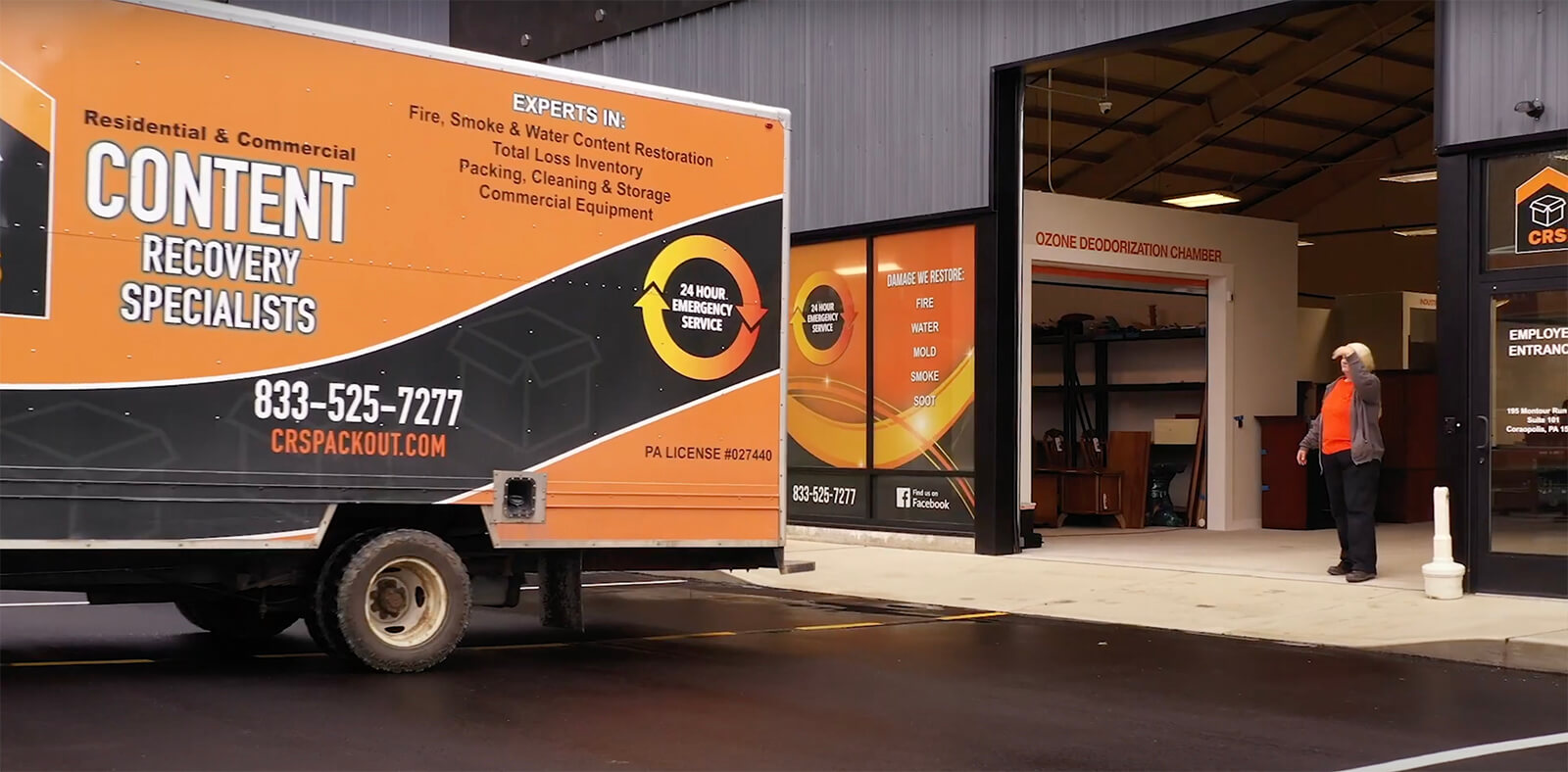
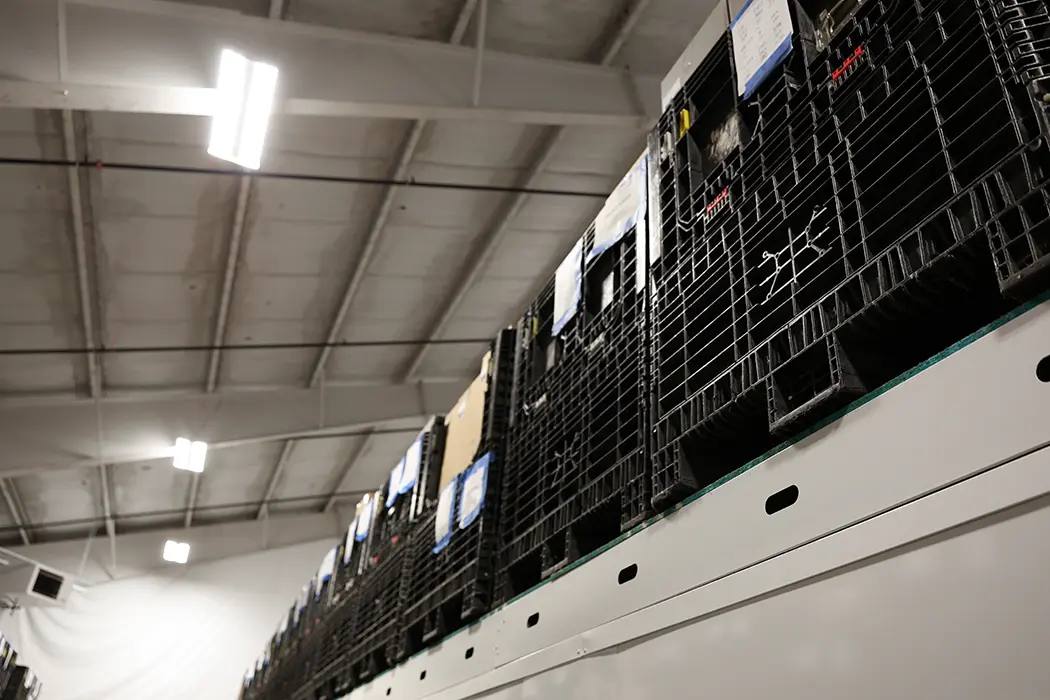
In contents restoration after a loss, storage containers or “vaults” are used to protect belongings before and after they are cleaned and restored. The choice of vault material – typically wood vs. plastic – can dramatically affect the risk of secondary damage and hence the overall claim outcome. Insurance adjusters often view wooden vaults as a cheaper option, but decades of industry experience show they come with hidden costs.
In contrast, plastic vaults are more expensive up front but far more durable and secure. This article compares wood and plastic storage vaults, weighing pros and cons, and explaining why Content Recovery Specialists exclusively uses plastic vaults.
What Are Storage Vaults in Contents Packout?
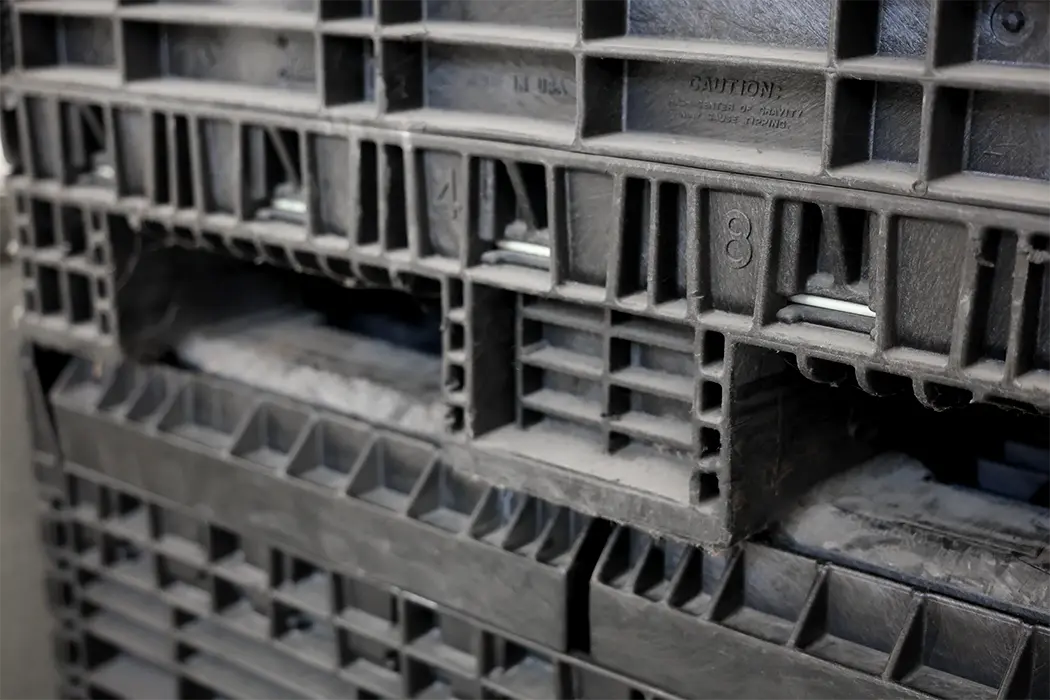
In contents restoration, a storage vault is the container used to safely store a policyholder’s belongings after a property loss. During a fire, water, or mold claim, content packout and restoration companies perform a “packout”, which involves carefully inventorying and removing contents from the damaged structure so cleaning and restoration can proceed. Those contents must then be stored in a temperature controlled environment — often for weeks or months — until they can be packbacked.
Storage vaults are typically large containers made from either wood (plywood panel construction with pallet bases) or heavy-duty plastic (engineered polymer crates, often collapsible and stackable). They are typically utilized to hold contents that can be stored in boxes like clothing, documents, photos, and other personal property.
While they may appear to serve the same function, the material used in these storage containers for packouts significantly impacts durability, moisture resistance, safety, and overall claim outcomes.
The Two Types of Storage Vaults: Wooden and Plastic
Wooden Storage Vaults: Traditional but Risky
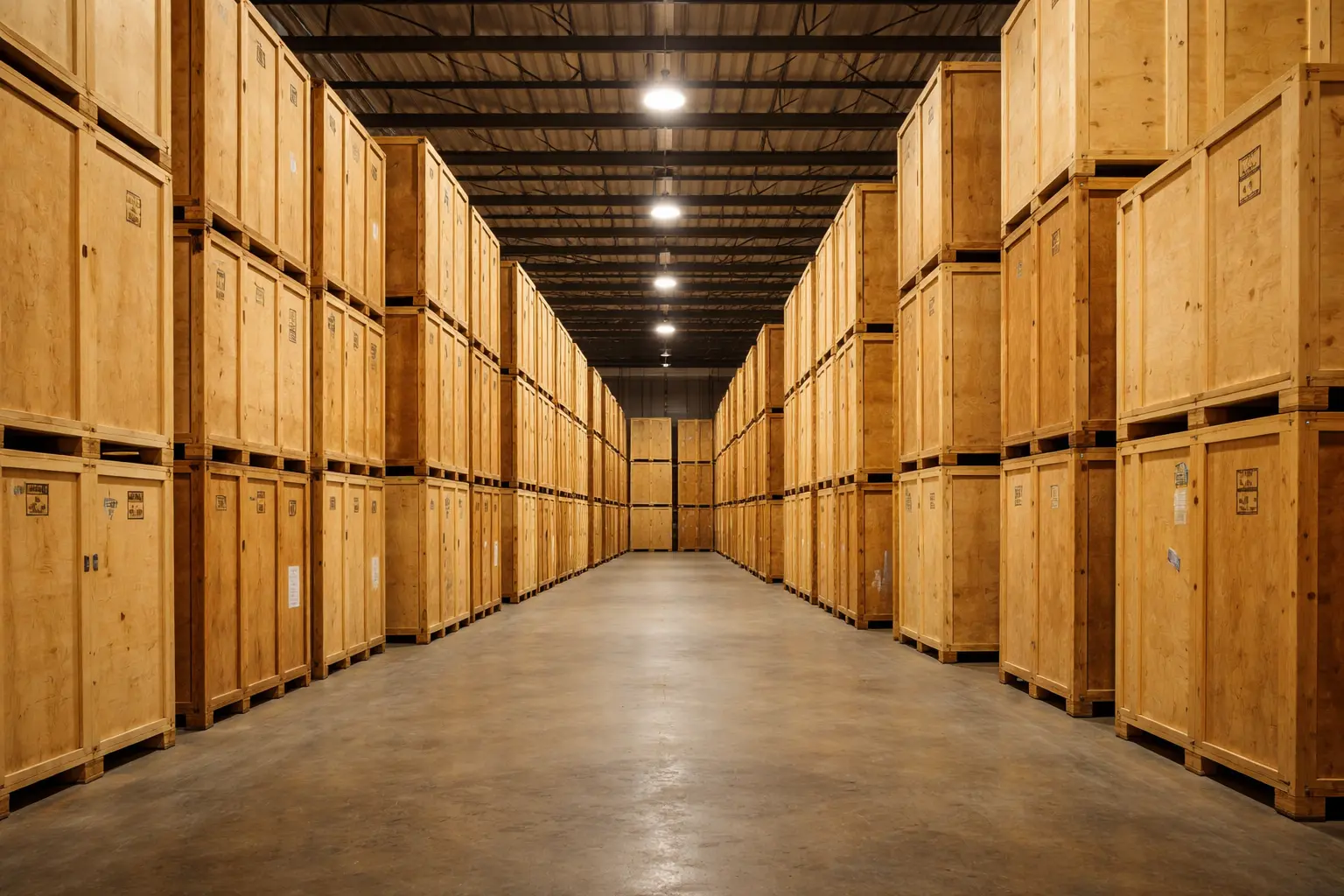
Wooden crates or “vaults” are usually built from thick plywood panels and metal hardware. For example, standard wood storage vaults typically have 1/2″ plywood floors and 3/8″ plywood walls, assembled with nails, staples, and clips for strength. Many restoration companies and pack-out providers still offer these vaults for household goods. They can support heavy loads – on the order of 2,000–3,000 pounds per crate – and are stackable (often 3 high for a total stacked capacity of 6,000–9,000 lbs).
However, wood’s inherent properties create risks for stored contents. Wood is sensitive to moisture and temperature – untreated plywood or lumber will absorb humidity or water, then swell, warp, crack or decay. In a humid or wet storage environment, this can introduce moisture to the contents inside or allow mold to grow on the crate and transfer to contents. Similarly, untreated wood can absorb and later release odors, so a wood crate that held dirty or smoky items may smell moldy or foul for months, contaminating clean items stored later. By contrast, plastic is non-porous and does not absorb water or odors, making it easier to clean and sanitize.
| Feature | Plastic Storage Vault |
|---|---|
| Primary Material | Plywood panels with pallet base |
| Typical Construction | Plywood walls nailed/stapled together with metal spring clips |
| Weight (empty) | Significantly heavier |
| Weight Capacity | ~2,000 – 3,000 lbs per vault |
| Stackability | Stackable but rely on pallet alignment; stability depends on clips and balance |
| Fastening System | Spring clips, nails, staples |
| Moisture Resistance | Absorbs moisture; can swell, warp, or grow mold |
| Odor Retention | Can absorb and retain smoke, mildew, or contamination odors |
| Pest Risk | Organic material; can harbor pests or mold |
| Cleanability | Difficulty to fully disinfect once contaminated |
| Fire Behaviror | Combustible; increases fire load |
| Reusability | Often limited reuse due to structural degradation |
Wood crates also pose safety hazards. Sharp edges, splinters, nails or clips can damage items or hurt handlers. In addition, many wooden vaults use metal spring clips or staples to hold panels together. These clips can bend or snap if shifted, overloaded or simply corroded over time. In fact, one member from Content Recovery Specialists has witnessed this very instance happen with other companies that use wooden containers.
“I’ve walked through warehouses that rely on wooden containers and watched metal clips snap loose mid-handling—turning a routine move into a costly mess as contents were left damaged in the aftermath.”
Danielle Miller
Franchisee Support
In summary, wooden vaults are sturdy and familiar, but their disadvantages often outweigh the cost savings. They are heavy, moisture-sensitive, potentially unsanitary, and require careful handling. At Content Recovery Specialists, we avoid wooden packout vaults entirely because they increase the risk of secondary damage to the client’s belongings.
Plastic Storage Vaults: Durable and Low-Risk
Plastic vaults (often referred to as plastic packout crates or bulk containers) are now the standard in heavy-duty industries, including restoration. Leading products, like those from Buckhorn Inc., are engineered using high-quality injection-molded high-density polyethylene (HDPE). This process ensures uniform wall thickness and incredible impact resistance.
One popular product they offer is the Collapsible Bulk Container, where the side panels fold down on integrated hinges and lock securely into place. Buckhorn also offers one-piece rigid totes for maximum structural integrity. In both designs, the focus is on extreme durability, reusability, and protecting contents from the elements.
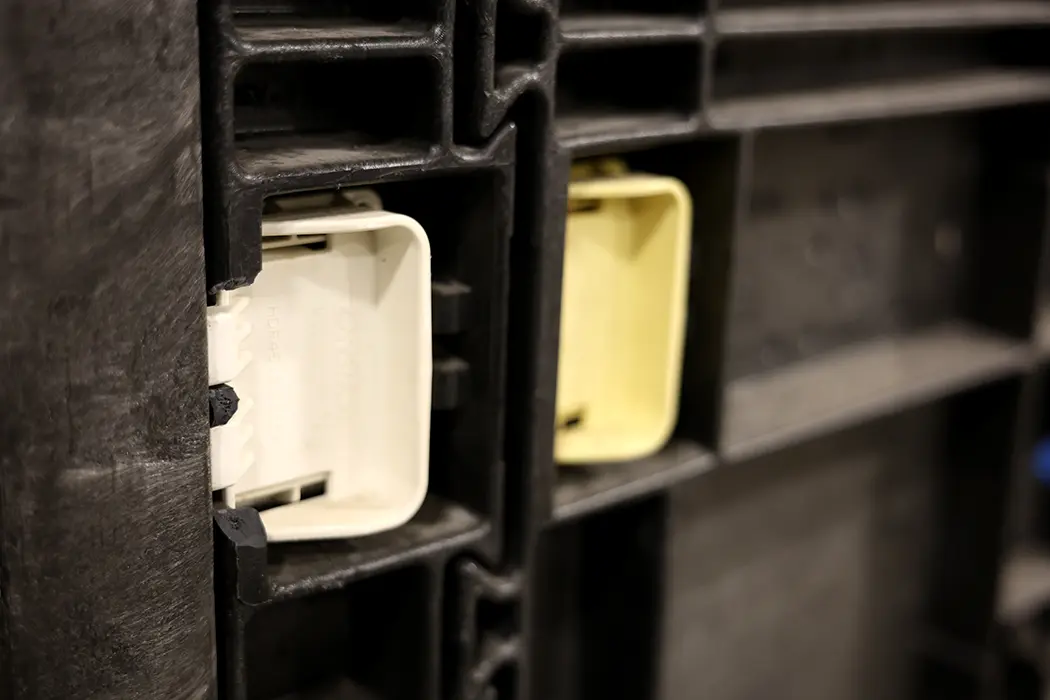
Plastic crates are lightweight, weather-resistant and reusable, so they withstand frequent handling. The rigid walls and interlocking lids mean contents stay secure without shifting or falling. Maintenance is easy: spray or wipe plastic clean between jobs.
| Feature | Plastic Storage Vault |
|---|---|
| Primary Material | High-density polyethylene (HDPE) or industrial polymer |
| Typical Construction | Molded panels with integrated hinges and locking tabs |
| Weight | Lightweight relative to size |
| Weight Capacity | Commonly 1,500 to 2000 lbs (depending on model) |
| Stackability | Designed to interlock and distribute weight evenly |
| Fastening System | Integrated hinges and molded locking mechanisms |
| Moisture Resistance | Non-porous, water-resistant, does not absorb moisture |
| Odor Retention | Does not absorb oders |
| Pest Risk | Non-organic; not susceptible to infestation |
| Cleanability | Easy to sanitize and reuse |
| Fire Behaviror | Some polymers self-extinguish; lower contribution to fire load |
| Reusability | High reuse cycle; designed for repeated handling |
The “disadvantages” of moving to plastic are relatively minor when viewed as a long-term investment. The most common hurdle is the initial cost, as premium injection-molded vaults require a higher upfront investment than single-use wood crates. However, because Buckhorn products are designed for hundreds of uses, restoration companies quickly amortize that expense over dozens of projects, eventually leading to a lower “cost-per-trip” than wood.
In short, plastic vaults offer superior durability and safety for content storage. Their perceived disadvantages—higher initial cost and structural rigidity—are eclipsed by their long-term performance. For content restoration and packout companies like Content Recovery Specialists, their partnership with Buckhorn offers unmatched protection for a client’s belongings.
Pros and Cons
Wooden Storage Vaults
- Lower Initial Cost
- High Weight Capacity Per Vault
- Widely Available
- Familiar to Traditional Storage Providers
- Susceptible to Moisture Absorption
- Can Warp, Swell, or Grow Mold
- May Absorb and Retain Odors
- Heavier and More Difficult to Handle
- Reliance on Nail and Spring Clips for Integrity
- Greater Collapse Risk if Clips Fail
- Can Splinter or Damage Contents
- Increase Potential for Secondary Loss
Plastic Storage Vaults
- Highly Durable and Impact-Resistant
- Water-Resistance and Non-Porous
- Does Not Absord Odors or Contaminants
- Designed for Secure Stacking and Load Distribution
- Lower Risk of Structural Failure
- Easier to Clean and Sanitize
- 10-15 Year Lifespan
- Reduced Risk of Secondary Damage to Contents
- Higher Upfront Purchase Cost
- Require Storage Space When Not In Use
Why Content Recovery Specialists Uses Plastic Storage Containers
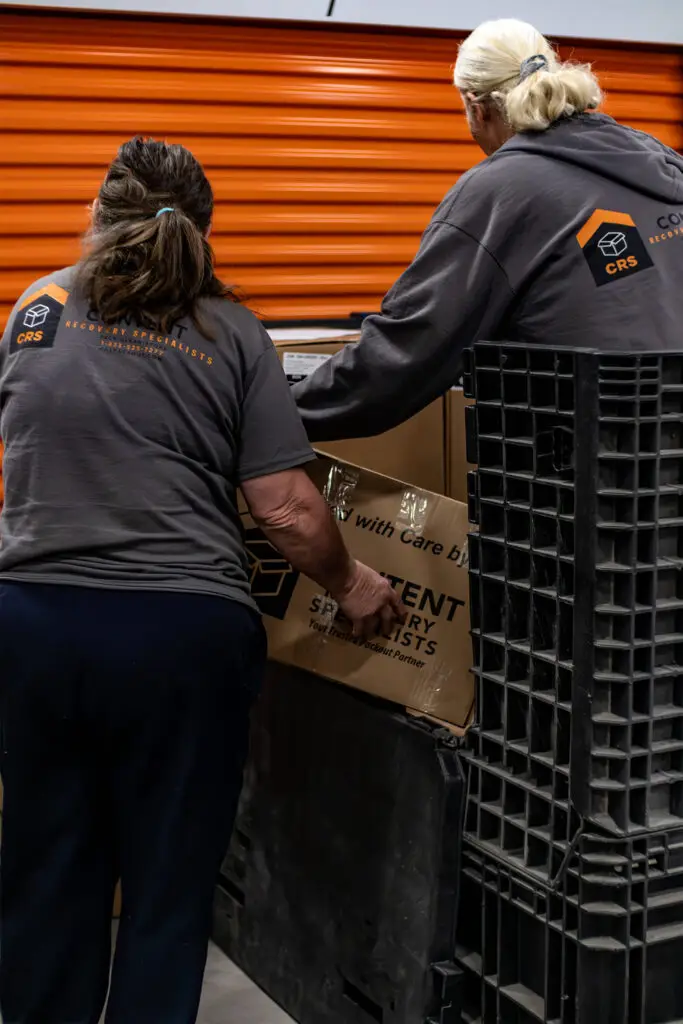
Content Recovery Specialists uses Buckhorn plastic vaults for all client packouts, based on experience and documented advantages. Key reasons include:
Maximized Contents Protection
Our plastic crates are engineered for commercial use; they are waterproof, impact-resistant, and stack-locking. We see far fewer cases of damage in storage compared to wood.
Safety and Liability
When our technicians stack crates, they know the weight is evenly carried and clips won’t fail. Using plastic simplifies risk management (no spring clip fails, no splinters, no fumigation worry).
Turnaround and Reusability
A CRS plastic vault returns to our warehouse after a job, gets inspected, cleaned and reused. This circular use lowers our environmental footprint and long-term cost. We don’t discard a plastic vault unless it’s irreparable.
Customer Trust
Homeowners and adjusters notice quality. When they see locked, plastic crates, they feel more confident the affected contents are secure.
Conclusion
In content restoration, storage container material is a small choice with big consequences. Wooden vaults, while common and initially cheaper, carry hidden risks, such as:
- Moisture damage
- Mold growth
- Odors
- Structural failure
- Secondary damage
Plastic vaults cost more up front but are safer, cleaner and longer-lasting. For insurance adjusters, this means a higher confidence that stored items will return undamaged – ultimately saving money by avoiding secondary claims.
Content Recovery Specialists therefore uses plastic packout vaults exclusively. Our experience (and cited industry research) shows that the improved protection for contents far outweighs the modest extra container cost. In short, material matters: selecting plastic vaults mitigates risk, preserves contents value, and helps avoid the very claim pitfalls adjusters want to prevent.